 Speak for Wolves
Support Speak for Wolves on #GivingTuesday
Each year, thousands of people come together on this one day – November 30 – to celebrate the missions and the accomplishments of organizations they love.
Speak for Wolves exists to engage people to fight for wildlife conservation, to elevate diverse voices and indigenous peoples in the conservation field, to support advocacy and direct action, to change federal and state wildlife policies, and to connect how lifestyle & food choices affect wildlife.
Thank you for considering Speak for Wolves during #GivingTuesday. Please help us meet our goal of $2,500 so that we can ensure another excellent conference in 2022.
Show your support of Speak for Wolves here: bit.ly/3mvu7Ro or by sending a check to Speak for Wolves, PO Box 83273, Portland, OR 97283.
Speak for Wolves is a 501(c)3 nonprofit organization with a GuideStar Silver seal of transparency. Donations are tax-deductible in the US: EIN: 46-2867294.
Help us plan for Speak for Wolves 2022
Virtual or in person? Take the 2-question survey
Action Alert:
After conservation groups filed petitions to relist gray wolves under the ESA this summer, the US Fish & Wildlife Service declined to give emergency protections but announced a 12-month status review of the delisting—meaning that, for a year, wolves will continue to lack protections.
Tell the US FWS’s why the gray wolf should be relisted under ESA! Submit a public comment here.

Inventory clearance: All shirts on sale!
40% off remaining stock of 2021 shirts in our store!
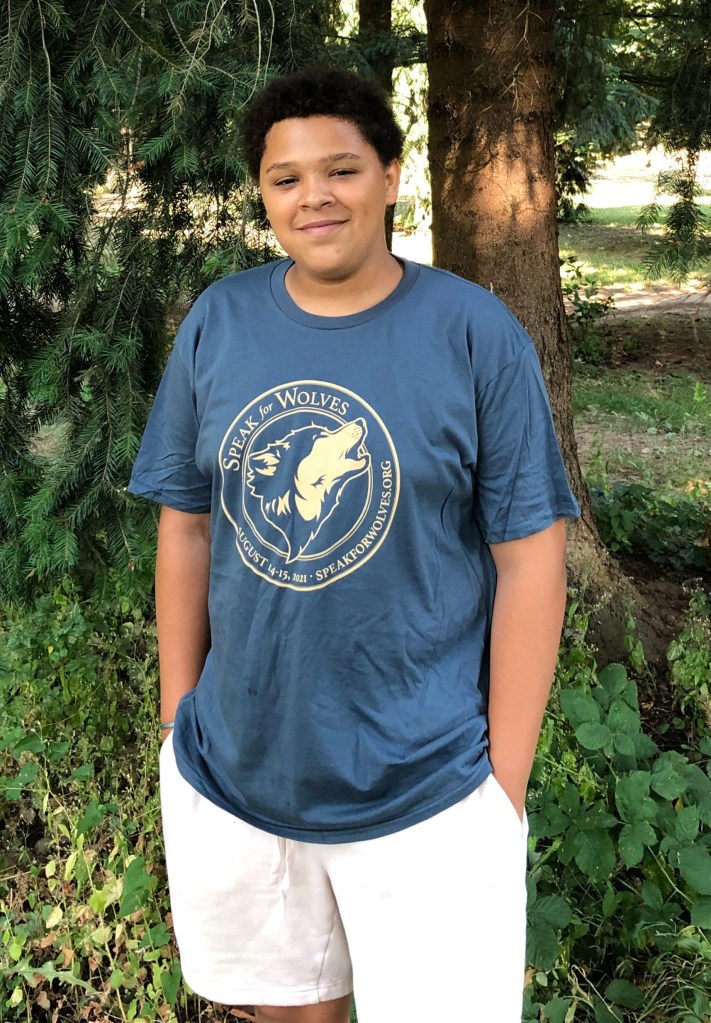
This year’s conference shirts were screenprinted by a Portland artist on 100% organic cotton, sweatshop free, USA-made, unisex, soft jersey Royal Apparel tees in Pacific Blue color with gold ink.
Limited stock in sizes XS-XXL.
Remaining 2019 & 2020 shirts are 50% off!
Shop now
GivingTuesday, Action Alerts, Plan for 2022
Hello wolf advocates,
So many wolf lawsuits, so little time to keep track of them.
In response to federal delisting and new anti-wolf laws in several states, this year we’ve seen a dizzying flurry of lawsuits and petitions at state and federal levels to relist wolves under the Endangered Species Act and block or restrict state wolf hunts.
On Friday, a federal judge will hear opening oral arguments in a set of three lawsuits against the US government’s ESA delisting in a California court. Check out this great summary of where these and other ongoing lawsuits and actions to protect wolves currently stand.
Support Speak for Wolves on #GivingTuesday
GivingTuesday is a global generosity movement unleashing the power of people and organizations to transform their communities and the world. GivingTuesday takes place on Nov. 30th this year, but you can donate any time this holiday season!
Donate with a card or PayPal now to support our efforts to educate and connect wolf advocates, or send a check to Speak for Wolves, PO Box 83273, Portland, OR 97283.
Speak for Wolves is a 501(c)3 nonprofit organization with a GuideStar Silver seal of transparency. Donations are tax-deductible in the US: EIN: 46-2867294.
Action Alert:
After conservation groups filed petitions to relist gray wolves under the ESA this summer, the US Fish & Wildlife Service declined to give emergency protections but announced a 12-month status review of the delisting—meaning that, for a year, wolves will continue to lack protections.
Tell the US FWS’s why the gray wolf should be relisted under ESA! Submit a public comment here.
Help us plan for Speak for Wolves 2022
Virtual or in person? Take the 2-question survey
Learn from the comfort of your couch:
- Sedona Wolf Week kicks off tomorrow (11/10/21) with 3 packed days of wolf-related sessions and films available via live stream online.
- Select recordings from the Speak for Wolves 2021 conference are available on our YouTube channel.
Inventory clearance: All shirts on sale!
A Speak for Wolves annual tradition, this year’s conference
40% off remaining stock of 2021 shirts in our store!
This year’s conference shirts were screenprinted by a Portland artist on 100% organic cotton, sweatshop free, USA-made, unisex, soft jersey Royal Apparel tees in Pacific Blue color with gold ink.
Limited stock in sizes XS-XXL.
Remaining 2019 & 2020 shirts are 50% off!
Shop now
Press Conference & Watch 2021 Conference Sessions on YouTube!
Hello wolf advocates,
Thank you to all who attended last month’s 8th annual conference, and a huge thanks to all of the excellent speakers! If you missed it or want to re-watch a session, the recordings are now available on our YouTube channel.
We continue to closely watch the status of this year’s wolf hunts and state kill orders. Wisconsin approved a kill limit of 300 wolves in the state against their own biologists’ recommendations, but now face a lawsuit over the hunt.
Oregon issued another kill permit for the Lookout Mt pack, of whom they horrendously killed two pups last month, and Washington issued a kill order for up to two wolves of the Togo Pack. Wolf advocates must call attention to the ongoing state-sponsored wolf slaughter in Oregon and Washington!
Join us on Tuesday, Sept. 14th, 10am PDT for a press conference & virtual rally to demand the halt of state-sponsored wolf slaughter in Washington and Oregon.
Speak for Wolves, the Northwest Animal Rights Network (NARN), Predator Defense, and the Animal Rights Coalition- PDX are teaming up to host a Virtual Rally and Press Conference in response to the recent state of wolf management and the media’s silence on it.
Watch Conference Sessions on YouTube!

Recordings of these sessions are now available:
- Corrine Nugent-Hayes, Poet, Wolf Advocate: Poetry reading: “When Shall These Mournings For Us End”
- Christopher Sebastian, Author, Researcher, Lecturer: Lone Wolf
- Zoë Hanley, Defenders of Wildlife: Innovating Predator-Livestock Non-Lethal Tools: Radio-Activated Guard Box 2.0
- Michael Waasegiizhig Price, Great Lakes Indian Fish & Wildlife Commission: “Whatever Happens to the Wolves Will Happen to Us”: Cultural Reflections of the Relationship Between the Wolf and the Anishinaabe People
- Sristi Kamal, Defenders of Wildlife: Oregon’s Wolves: Conflict and Coexistence
- Stephen Capra, Footloose Montana: Update on Wolves in Montana
- John Murtaugh, Defenders of Wildlife: Colorado’s Gray Wolf Reintroduction
- Anna Le, Biologist & Educator, Yellowstone National Park: The Harms of Gatekeeping Wildlife
- Quinn Read, Center for Biological Diversity: Fish & Wildlife Commission Reform
- Panel: Jodi Habush Sinykin, Environmental Attorney; Samantha Bruegger, WildEarth Guardians; and Nancy Warren, National Wolfwatcher Coalition: Blueprints for Wolf Conservation Planning Using Science, Inclusivity & Ethical Practices
- Erica Prather, Defenders of Wildlife: Take Action, Make a Difference, Have Your Voice Heard Through the Legislative Process
- Sarah Hanneken, Animal Equality and Faunalytics: The Importance of Data for Effective Wildlife Advocacy
Get your collector t-shirt!

Available in our store!
A Speak for Wolves annual tradition, this year’s conference shirts are screenprinted by a local Portland artist on 100% organic cotton, sweatshop free, USA-made, unisex, soft jersey Royal Apparel tees in Pacific Blue color with gold ink. Sizes XS to XXL. Visit the store for this year’s t-shirts and more!
Announcing a special guest speaker at Speak for Wolves conference: Rain

Rain is the Director of FAMILY, a new short film asking Secretary of the Interior Deb Haaland to relist the wolf under the Endangered Species Act.
Join us for the 3-minute film screening followed by Q&A and conversation with Rain on the first day of the conference, Saturday, August 14th at 4pm PDT.
Additional speaker announcements and full conference schedule below!
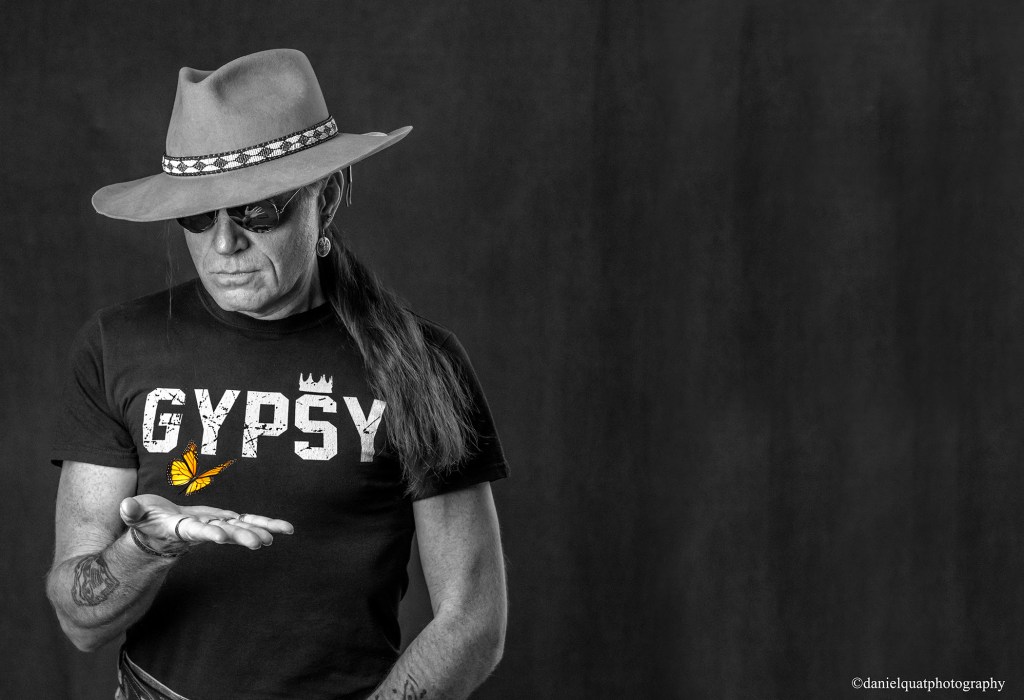
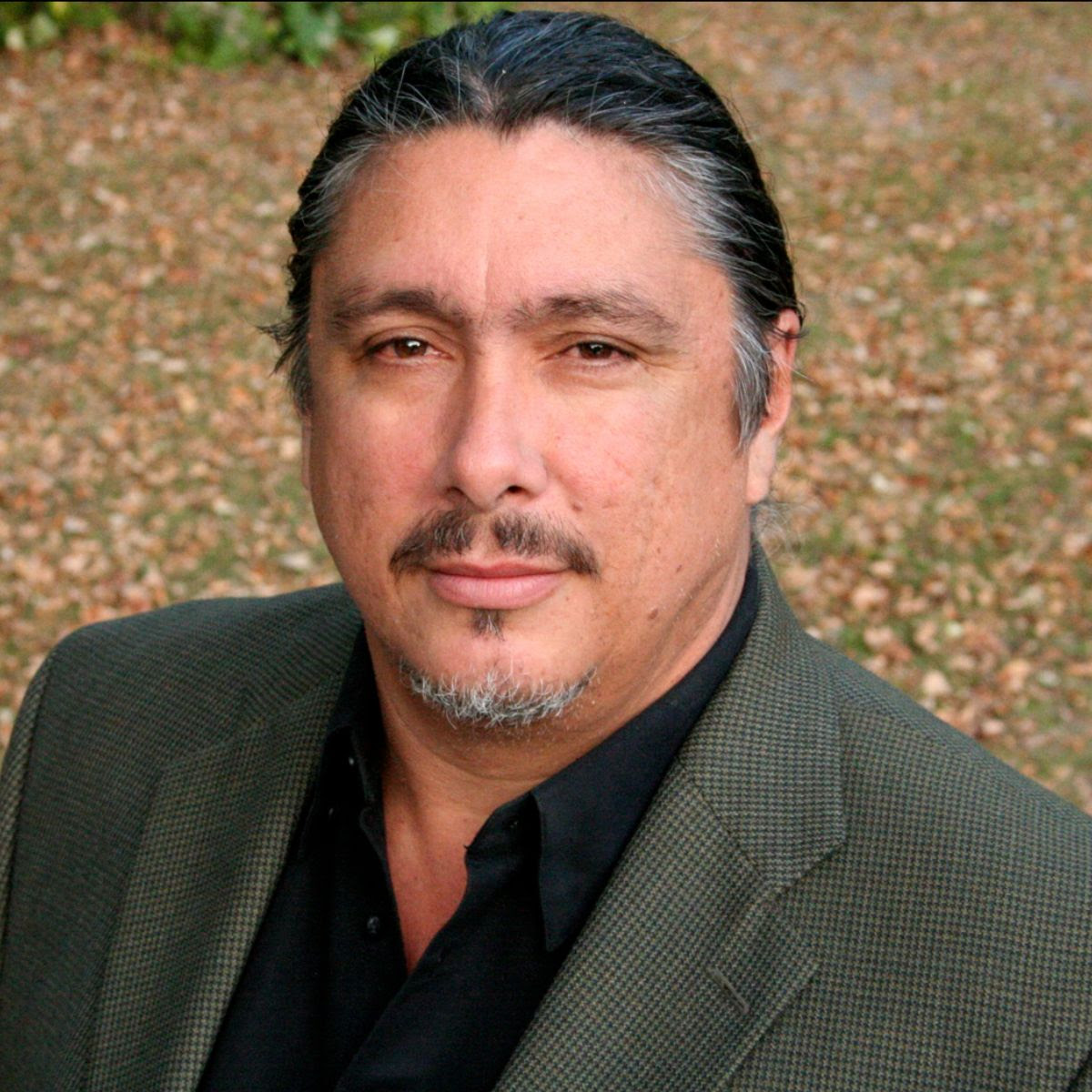
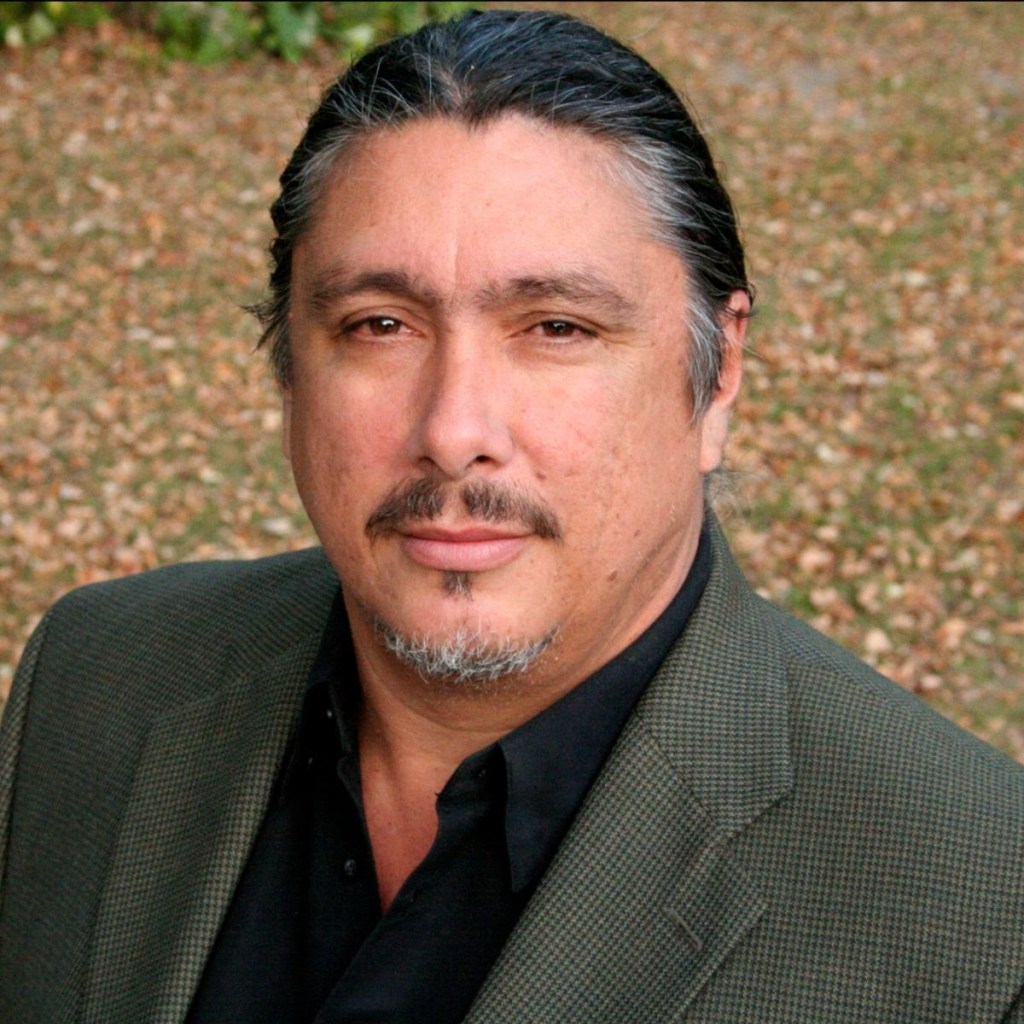
Rain Bear Stands Last is an acclaimed documentary film director. Two of his films have drawn national and international attention to the Murdered and Missing Indigenous Women and Girls crisis: Say Her Name and Somebody’s Daughter.
Rain currently serves as Executive Director, Global Indigenous Council, leading the policy positions and implementing the manifesto of one of the most effective current indigenous rights organizations; as Senior Advisor, Rocky Mountain Tribal Leaders Council, and as UN Ambassador, International Romani Union.

Speaker Announcement
Visit the program page for full schedule details and speaker bios.

Erica Prather is an organizer on federal policy in Arizona and National Outreach Representative for Defenders of Wildlife.
Erica will advise on how best to advocate with decision makers. Take action, make a difference, and have your voice heard through the legislative process!
Stephen Capra of Footloose Montana is the former Executive Director of New Mexico Wild and worked to create two National Monuments and three wilderness areas in New Mexico. He started the Mexican wolf coalition and worked to end trapping in New Mexico.
Stephen will give an overview on the wolf issue and reality check on Montana’s legislature and Governor.

Get your collector t-shirt!

Available in our store!
A Speak for Wolves annual tradition, this year’s conference shirts are screenprinted by a local Portland artist on 100% organic cotton, sweatshop free, USA-made, unisex, soft jersey Royal Apparel tees in Pacific Blue color with gold ink. Sizes XS to XXL.
Full Conference Program
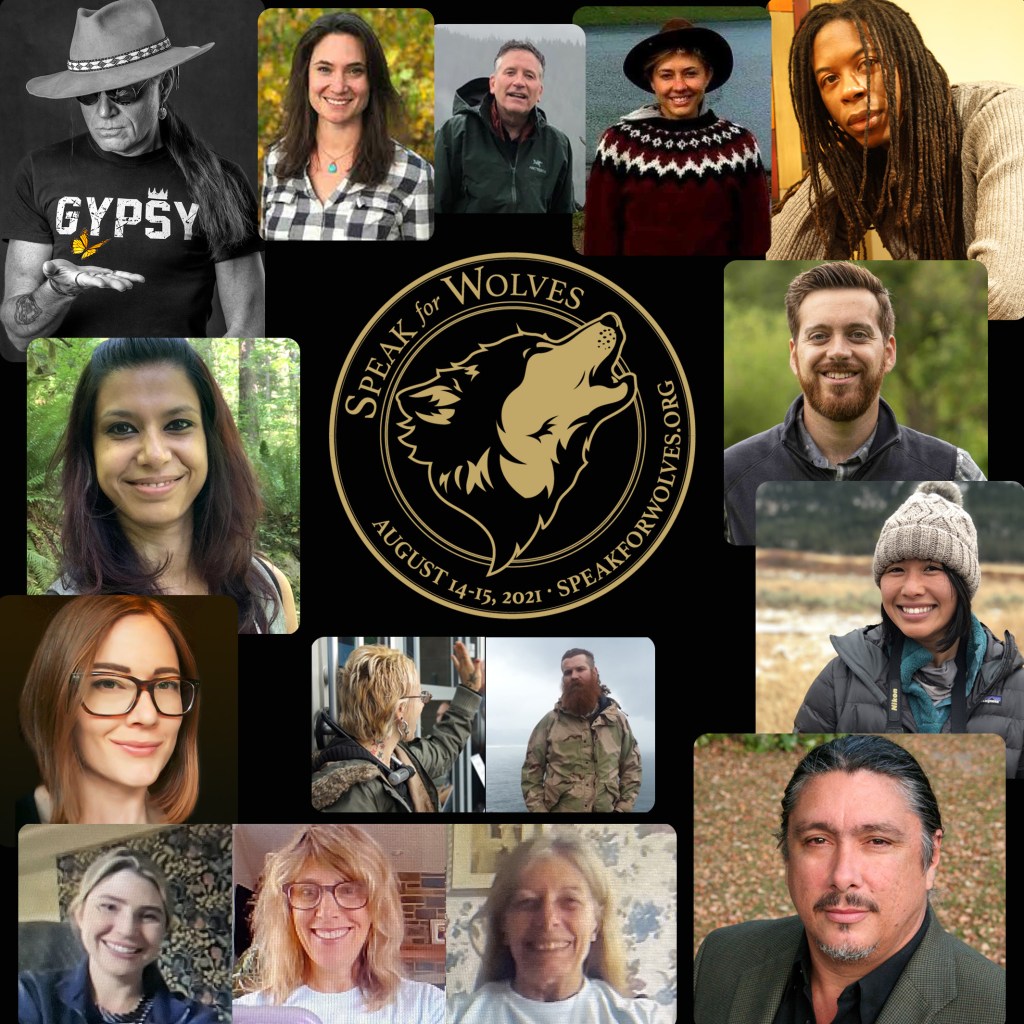
Saturday August 14th: 10 am – 4:30 pm PDT
- 10 am Welcome, Opening Remarks
- 10:10 am Corrine Nugent-Hayes, Poet, Wolf Advocate: Poetry reading: “When Shall These Mournings For Us End”
- 10:15 am Christopher Sebastian, Author, Researcher, Lecturer: Lone Wolf
- 11:30 am Zoë Hanley, Defenders of Wildlife: Innovating Predator-Livestock Non-Lethal Tools: Radio-Activated Guard Box 2.0
- 1 pm Michael Waasegiizhig Price, Great Lakes Indian Fish & Wildlife Commission: “Whatever Happens to the Wolves Will Happen to Us”: Cultural Reflections of the Relationship Between the Wolf and the Anishinaabe People
- 1:45 pm Sristi Kamal, Defenders of Wildlife: Oregon’s Wolves: Conflict and Coexistence
- 3 pm Stephen Capra, Footloose Montana: Update on Wolves in Montana
- 3:30 pm John Murtaugh, Defenders of Wildlife: Colorado’s Gray Wolf Reintroduction
- 4 pm “FAMILY” short film screening followed by Q&A with the Director, Rain Bear Stands Last, Filmmaker; Global Indigenous Council
Sunday August 15th: 10 am – 3:45 pm PDT
- 10 am Welcome, Day 2
- 10:10 am Anna Le, Biologist & Educator, Yellowstone National Park: The Harms of Gatekeeping Wildlife
- 11 am Quinn Read, Center for Biological Diversity: Fish & Wildlife Commission Reform
- 1 pm Panel: Jodi Habush Sinykin, Environmental Attorney; Samantha Bruegger, WildEarth Guardians; and Nancy Warren, National Wolfwatcher Coalition: Blueprints for Wolf Conservation Planning Using Science, Inclusivity & Ethical Practices
- 1:40 pm Erica Prather, Defenders of Wildlife: Take Action, Make a Difference, Have Your Voice Heard Through the Legislative Process
- 2:30 pm Sarah Hanneken, Animal Equality and Faunalytics: The Importance of Data for Effective Wildlife Advocacy
- 3:10 pm Panel: Airick, Hunt Saboteurs Association; Steph, Speak for Wolves: Using Direct Action as A Tactic for Saving Wildlife
- 3:45 pm Conference Closing
Speak for Wolves is a volunteer-run, nonprofit 501(c)3 organization, EIN 46-2867294
Meet 2 more of this weekend’s speakers: Sristi Kamal & John Murtaugh

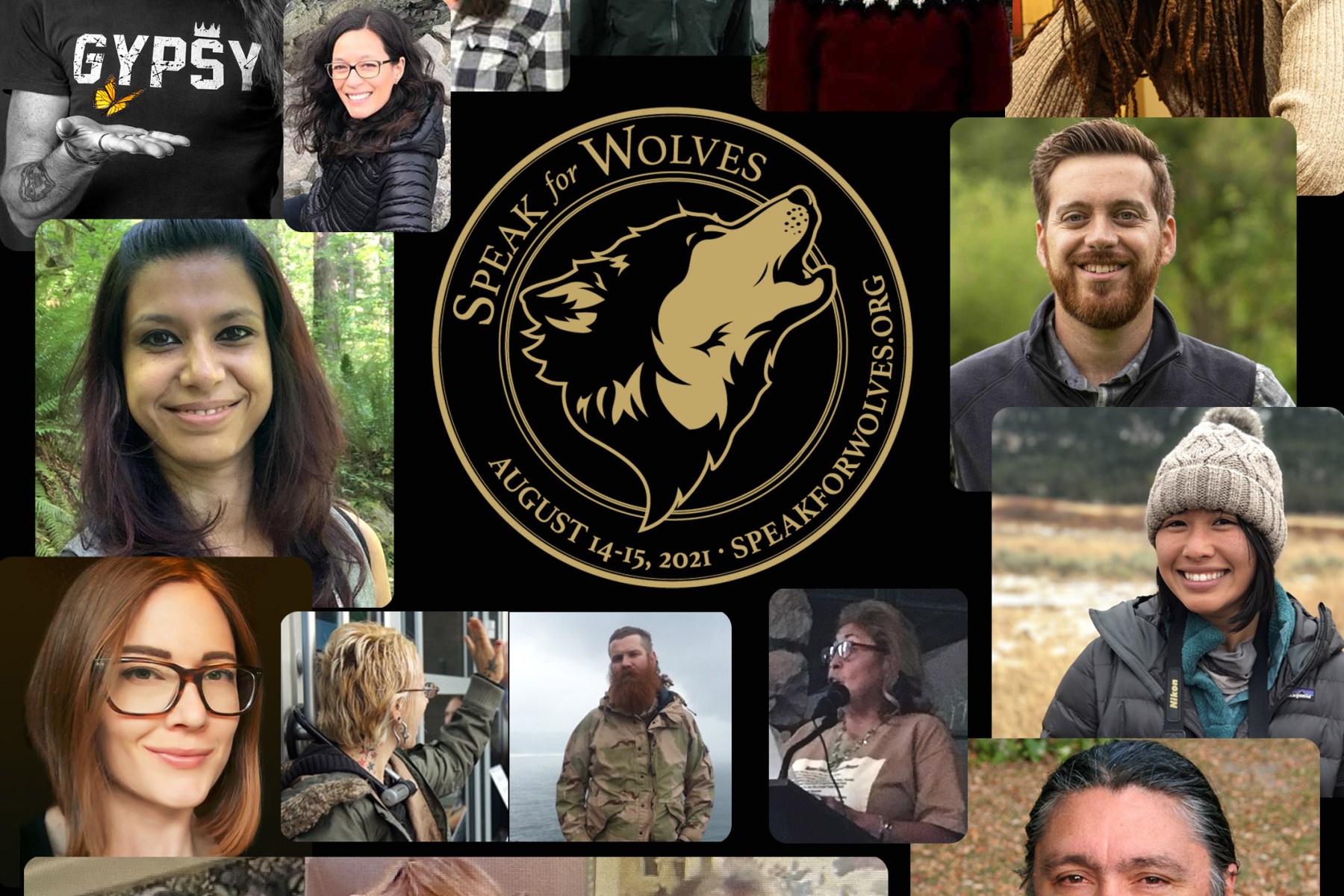
The 8th annual Speak for Wolves conference will take place this weekend! We’re excited to host a diverse group of speakers working in wolf & wildlife advocacy from across the Western States and Great Lakes.
Don’t miss out on the latest science & policy updates, advocate tools, and activist tactics in the fight to save wolves.
Visit the program page for full schedule details and speaker bios.
Join us on Saturday & Sunday, August 14-15!
Webinar access information will be sent to registrants later this week.
Speaker Announcements
Sristi Kamal is from India and grew up in a biodiversity hotspot with elephants, rhinos, leopards and tigers which sparked a childhood and lifelong passion for wildlife. She currently works for Defenders of Wildlife in their NW office of the Field Conservation Program. In her current role, she works to protect imperiled and native species in Oregon and their habitats, including wolves.
Sristi will talk about Oregon’s Wolves: Conflict and Coexistence—an update on the status of wolves in Oregon, Oregon’s wolf management policy and current instances of conflict and where we go from here.

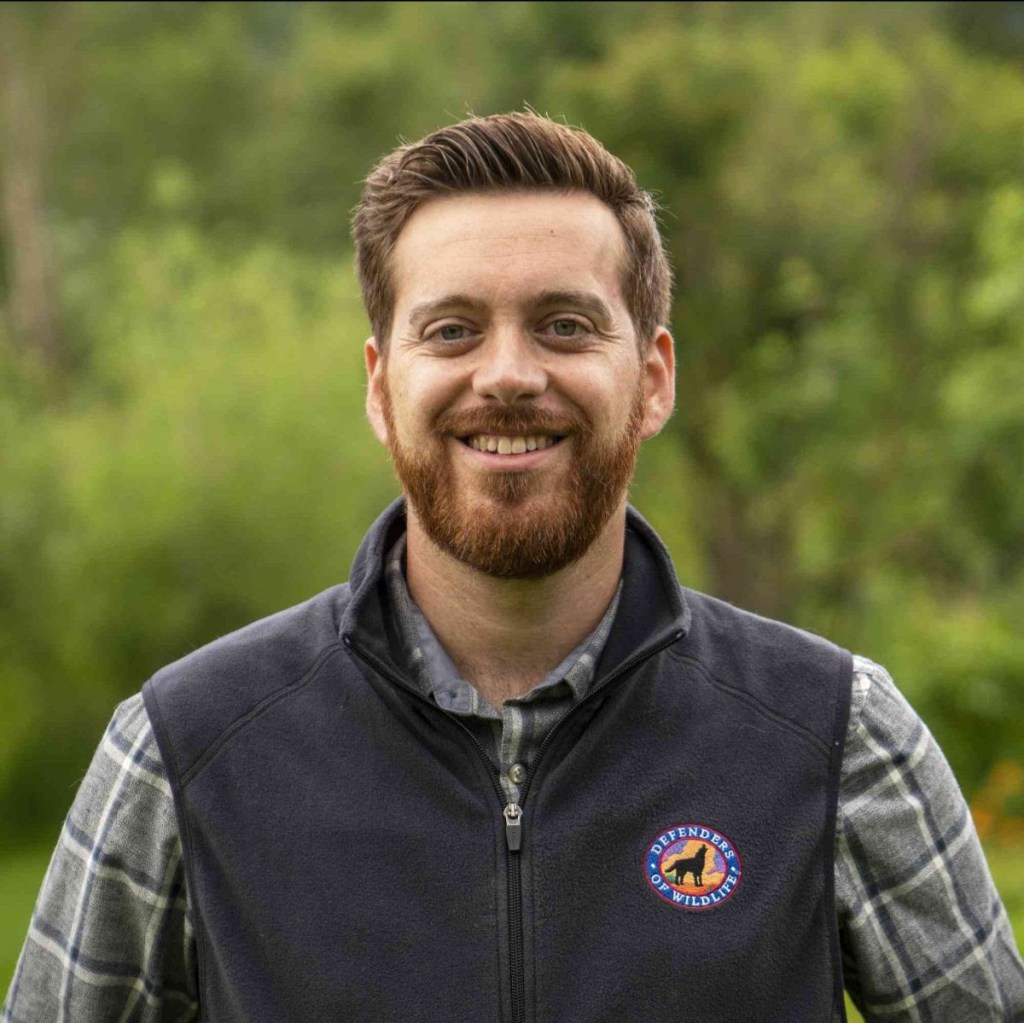
John Murtaugh of Defenders of Wildlifebrings a lifetime of passion for wolf recovery to the Rockies and Plains as he works to restore wolves to the region. By working with stakeholders across the spectrum, he works to create a strong coalition of support, ensuring that wolves and people can coexist in the west.
John will update us on Colorado’s Gray Wolf Reintroduction. In 2020, Colorado voters directed the Colorado Parks and Wildlife agency to begin a wolf reintroduction by the end of 2023. Now, the state has set forth a plan and has begun a process of advisement from key stakeholders, technical experts, and the public.
Conference T-shirts
Available in our store!
A Speak for Wolves annual tradition, this year’s collector conference shirts are screenprinted by a local Portland artist on 100% organic cotton, sweatshop free, USA-made, unisex, soft jersey Royal Apparel tees in Pacific Blue color with gold ink.
Buy yours now to support the conference!
Also available: Speak for Wolves stickers! Remaining stock of prior years’ shirts @ 50% off!
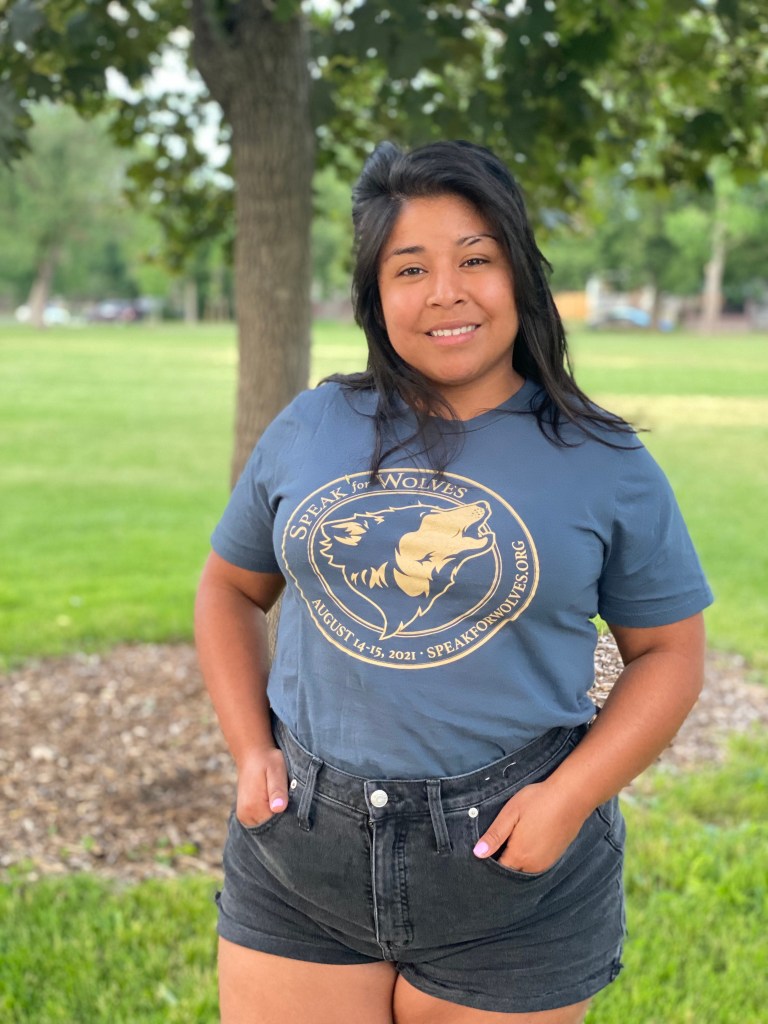
Speak for Wolves is a volunteer-run, nonprofit 501(c)3 organization, EIN 46-2867294
Make a Tax-Deductible Donation to Speak for Wolves

The Speak for Wolves conference is the longest standing, grassroots wildlife conference of its kind, thanks to our dedicated supporters. Speak for Wolves is a 100% volunteer-run 501(c)3 nonprofit organization, EIN 46-2867294.
About the Issues

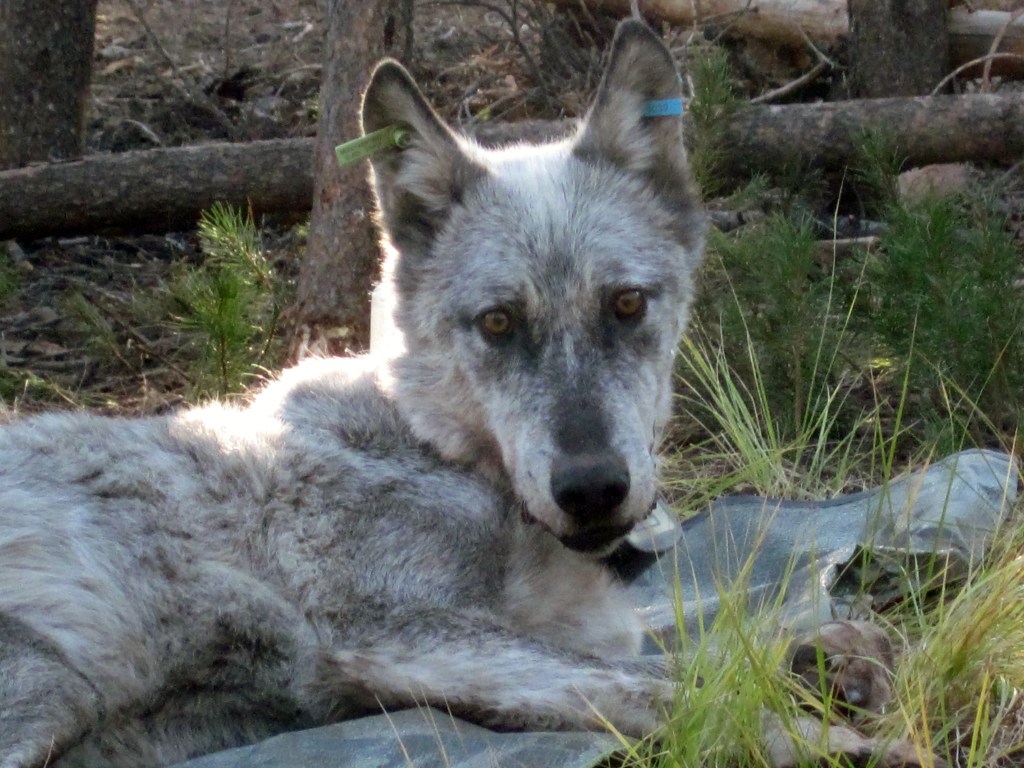
Wolves once roamed freely across much of the land that is now called North America. Indigenous peoples actively managed the land responsibly, including lands that many in the conservation movement call “wilderness”. Starting in the 1500s through 1800s, European settlers, spreading across the continent, stole the land and its resources, committed genocide of indigenous peoples, and began exploiting wildlife to the point of extermination.
By the 1940s, wolves were extirpated from the landscape, thanks to government-sponsored bounty programs.
In 1974, the gray wolf (Canis lupus) was listed on the federal Endangered Species Act. Wolves slowly began to disperse back into the northern reaches of the US from Canada, and in the 1990s, wolves were reintroduced to Yellowstone and Idaho.
As wolves returned to states where they had once lived, state wildlife agencies developed wolf management plans under their own state Endangered Species Acts, working in tandem with the US Fish and Wildlife Service, which managed federal protections.
While wolf populations have slowly recovered in the 30 years since reintroduction, they still only occupy less than 10% of their historic range in the US. As wolf populations began to grow and conflicts arose with hunters and ranchers unhappy with this keystone predator returning to “their” land, states began removing wolves from local ESA protections and allowing wolf hunts. In 2020, the Trump administration removed the gray wolf from federal protection.
As of February 10, 2022 a U.S. District Court Judge reinstated federal protections that were removed under the Trump administration. Though this is a big win for science based decision making, wolves in Montana, Idaho, Wyoming, and parts of eastern Washington and Oregon were exempt from this reinstatement and are still in need of federal protections.
Those of us who are settlers must recognize how our long history of settler colonialism, white supremacy, and racist policies were driving forces that led us to where we are now: trying desperately to reverse the destruction of wildlife and the environment before it’s too late, as wildfires rage, climate change threatens our near future, and our culture wars divide us into those who want to save keystone species vs. those who want to keep ranching cows on public lands for our dinner plates.
To dig deeper, check out our recommended films and readings.
Reforming Wildlife Management
Re-envision state fish & wildlife departments
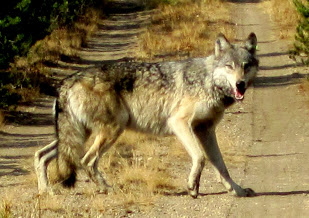
In Western States, Governors currently appoint fish and wildlife commissioners. These commissioners have authority over agency policy including predator management. Until we transition to a process that prioritizes appointing commissioners that are scientifically qualified, absent of private interests like hunting, trapping and agri- business, we will continue to see commissioners that abuse power and privilege to leverage their personal agenda. Fish & Wildlife Departments need to reflect the diversity of interests of the broad public and rectify the historic prioritization of special interest groups that put profit over wildlife.
Read an overview of what’s currently considered “wildlife management” in the US here.
Watch a great video presentation about Fish & Wildlife Commission Reform here.
Reduce grazing on federal public lands

Grazing is ecologically damaging to land in the arid West. Non-native livestock are responsible for soil compaction, destruction of wetlands and riparian zones. With 60% of land in the world dedicated to livestock grazing we see a decrease in water retention and aquifer recharge, soil erosion that leads to flooding, and a net-loss of biodiversity. Livestock grazing contributes to the spread of harmful invasive plant species and the degradation of native symbiotic relationships.
These destructive grazing practices are heavily subsidized by taxpayers every year to the tune of tens of millions of dollars. The work to mitigate, reduce, and eventually eradicate grazing on public lands needs to be prioritized for the benefit of wolf- livestock coexistence and the return of the flourishing west.
Read more about the ecological costs of grazing here.
Wildlife Services: Killing Funded by Your Tax Dollars
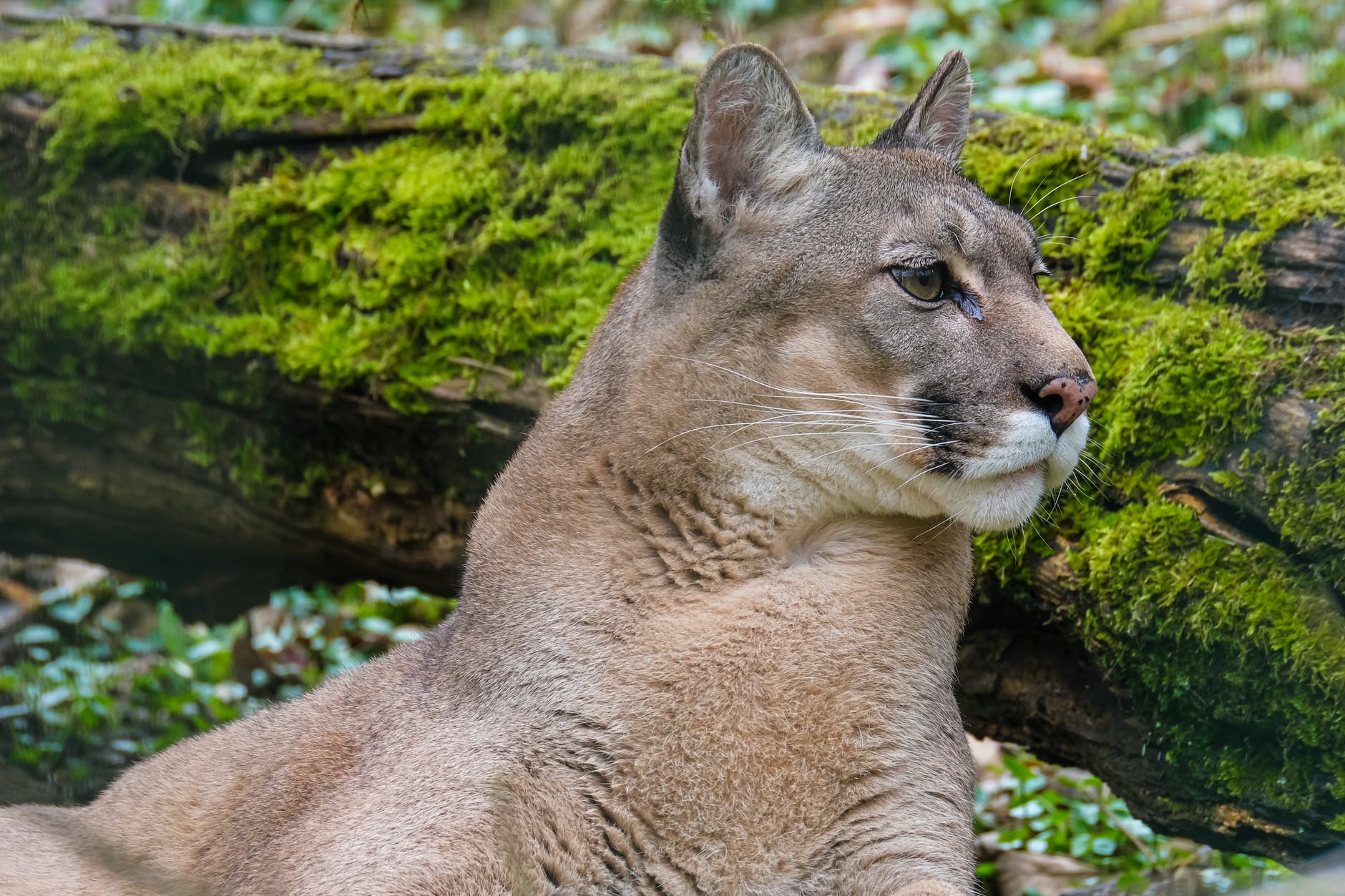
Every year the USDA Wildlife Service kills millions of animals, including wolves, coyotes, black bears, mountain lions, bobcats, beavers, birds, and countless other species, including house pets. Wildlife Services uses neck snares and foot hold traps, toxic cyanide (M44’s) and aerial gunning (helicopters) to slaughter native wildlife across the country. This agency historically and primarily serves the interests of the agriculture and livestock industry.
Gray wolf recovery has been slow due to the US federal governments prematurely abandoned recovery efforts in order to appease powerful livestock and sportsmen interests. Currently, state fish and game agencies have authority over gray wolf “management”. State-sanctioned hunting, trapping/snaring, and hounding seasons have resulted in thousands of wolves being killed. Massive killing increases in Wisconsin, Idaho, and Montana, due to Trump Era Endangered Species delisting and the 2021 introduction of new legislation, threaten to decimate any progress that has been made for wolf recovery thus far.
For a primer about Wildlife Services, read the 2015 HSUS report, “Wildlife Disservice: The USDA Wildlife Services’ Inefficient and Inhumane Wildlife Damage Management Program”
2022 update on Wildlife Services’ activities in 2021: “‘A barbaric federal program’: US killed 1.75m animals last year – or 200 per hour” (The Guardian)
Ban trapping and snaring on federal public lands

Leg-hold traps, conibear traps, and neck snares are indiscriminate killers that have no place on federal public lands. Reported incidents of domestic pet and endangered, non-target species being trapped, snared, and/or killed on public lands in states like Idaho and Montana have made trapping and snaring a public safety issue that spans beyond wildlife activism. The variety in trap check time laws from 72 hours to weeks at a time, spotlight the cruel and disturbing nature that is snaring. Trapping and Snaring is not sport, it is inhumane slaughter.
Wildlife advocates should urge their elected leaders to ban leg-hold traps, conibear traps, and neck snares by introducing legislation that would protect not only wildlife, but domestic pets and those that recreate on public lands.
Read more about the problems with trapping here.
End wildlife derbies and the hunting of carnivores

The best available science suggests that carnivores, including gray wolves, are self-regulating species. Carnivores don’t need to be managed, they have evolved with their prey over thousands of years, with species populations constantly fluctuating.
The livestock industry and sportsmen groups have continually held wildlife derby contests “for population control and management”. The trapping, snaring, hounding, and trophy-hunting of carnivores runs counter to public sentiment and ethics. We will continue to work and support efforts to eradicate these wildlife derbies and sport hunting contests, but there is more work to be done.
Access the HSUS End Wildlife Killing Contests Toolkit.
Reprehensible Wolf Killings & Speaker Announcements
This week, the Oregon Department of Fish & Wildlife shot two 3.5 month old Lookout Mountain pack wolf pups from a helicopter in response to private profit loss from livestock depredations.
This horrific killing of two innocent young pups is reprehensible. We encourage you to e-mail or call the ODFW offices to politely voice your disgust over this action to: odfw.commission@odfw.oregon.gov or (503) 947-6000.
While there has been much discouraging wolf news of late in Oregon, Montana, Idaho, and Wisconsin, there are also bright spots in the story of wolf recovery, such as reintroduction in Colorado and new packs establishing in California.
Don’t miss out on the latest science & policy updates, advocate tools, and activist tactics in the fight to save wolves!
Join us on Saturday & Sunday, August 14-15!
Check out our program page for full schedule details and speaker bios.
Space is limited! Webinar access information will be sent to registrants a few days before the conference.
2021 Speaker Announcements
Michael Waasegiizhig Price is the Traditional Ecological Knowledge Specialist at the Great Lakes Indian Fish and Wildlife Commission headquartered in Odanah, WI. He is Anishinaabe and an enrolled member of Wikwemikong First Nations in Canada.
Michael will tell the story of the historical journey and the relationship between the wolf and the Anishinaabe people of the Great Lakes region. As Anishinaabe cultural teachings tell us: “Whatever happens to the wolf will happen to Anishinaabe, and whatever happens to Anishinaabe will happen to the wolf.”
Panel: Using Direct Action as A Tactic for Saving Wildlife
What do we do when we’ve exhausted all legal tactics of stopping wildlife killing, but the killing continues?
This panel will feature seasoned direct action activists who have utilized non-violent direct action as a tactic to interfere with harassment or targeted killing of wildlife. Topics include using your own body as a form of protest to stop killing or to bring attention to the issue and participating in ongoing efforts to sabotage planned wildlife hunts.
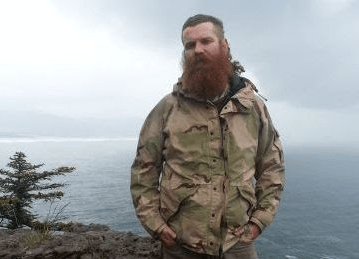
Airick has been a wildlife advocate for over 36 years. He is a former Hunt Saboteur of 30 years.
Steph is a direct action activist with a long history of locking their body to things and dangling off stadiums, high-rise buildings, and 150 foot doug firs to call attention to state sponsored wolf slaughter, habitat destruction, and climate change.

2021 Conference T-shirts

Available in our store!
A Speak for Wolves annual tradition, this year’s collector conference shirts are screenprinted by a local Portland artist on 100% organic cotton, sweatshop free, USA-made, unisex, soft jersey Royal Apparel tees in Pacific Blue color with gold ink.
Buy yours now to support the conference!
Speak for Wolves Conference in less than two weeks!

With so much happening in the fight to save wolves this year, you don’t want to miss out on the latest info about wolf conservation.
This year’s online program will cover:
- Updates on wolves in key states from the folks who are working on the frontlines of wolf conservation
- Inclusion of BIPOC (Black, Indigenous, and People of Color) communities in wildlife education and wildlife management reform
- Tools & tips for activists working to protect wolves, including:
- New Wolf Conservation Planning resource guides for advocates & agencies
- Using data for effective advocacy tactics
- Direct Action hunt/trap sabotage: experiences from the field
- And more!
Check out our program page for full schedule details and speaker bios.
Space is limited! Webinar access information will be sent to registrants a few days before the conference.
2021 Speaker Announcements
Ane Le is a passionate environmental educator, conservationist, aquatic biologist, and outdoor recreationist. She has spent the past few years in California, Oregon, Wyoming, Montana, and Colorado, working in freshwater and saltwater ecosystems, exploring public lands, engaging with local communities, and educating K-12 students about conservation efforts and the outdoors. Anna currently works as an educator in Yellowstone National Park, where she interacts with hundreds of individuals a day to educate about wildlife conservation.
Anna will talk about how gatekeeping wildlife/wolf watching and education ultimately harms the species while also affecting BIPOC and other underrepresented communities from being stewards in conservation.

Panel: Blueprints for Wolf Conservation Planning Using Science, Inclusivity & Ethical Practices

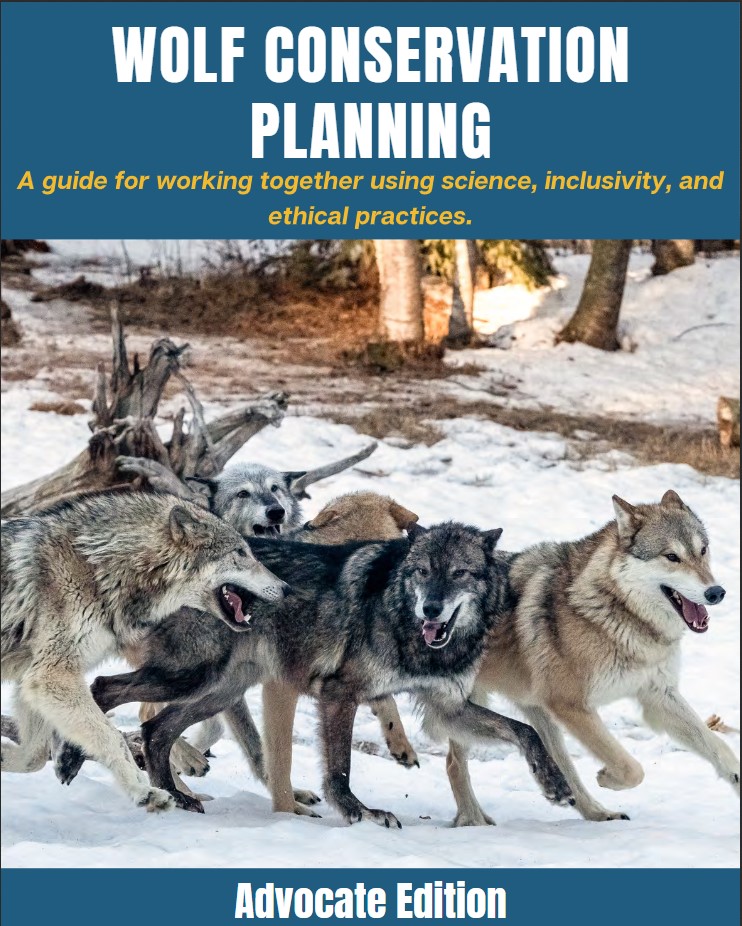
The panel will share a set of Wolf Conservation Planning resources, based on best science, democratic processes, inclusivity, and ethics, which are the culmination of an intensive collaborative effort by multiple organizations, with input and critiques from a broad array of scientists, ethicists, retired and current agency professionals, Tribal biologists and representatives, and academic experts. Advocates will be provided information and ideas vital to wolf conservation planning, along with the academic and scientific research to back every recommendation made in the wolf planning resources.
2021 Conference T-shirts
Available in our store!
A Speak for Wolves annual tradition, this year’s collector conference shirts are screenprinted by a local Portland artist on 100% organic cotton, sweatshop free, USA-made, unisex, soft jersey Royal Apparel tees in Pacific Blue color with gold ink.
Buy yours now to support the conference!

Speak for Wolves 2021: Space is limited, Register Now!

Speak for Wolves 2021 is less than a month away, and this year’s program is not to be missed! Get the latest state-by-state updates on wolves from the folks who are working on the frontlines of wolf conservation, engage with the histories of wildlife management and perception of wolves in society, and learn about new as well as tried & true tactics in the fight to protect wolves.
Check out our program page for the full schedule. Space is limited! Webinar access information will be sent to registrants a few days before the conference.
2021 Speaker Announcements
Quinn Read is the Oregon Policy Director for the Center for Biological Diversity. She works to protect and restore Oregon’s imperiled species and landscapes. She is a member of Oregon’s Environmental Justice Task Force and served on Governor Kate Brown’s Environmental Equity Committee.
In her talk on Fish & Wildlife Commission Reform, Quinn will take a close look at how state commissions shape fish and wildlife conservation policy, and how the enduring stain of colonialism and white supremacy that prioritizes the “legacy” of sport hunting, trapping and fishing continues to permeate decision making.

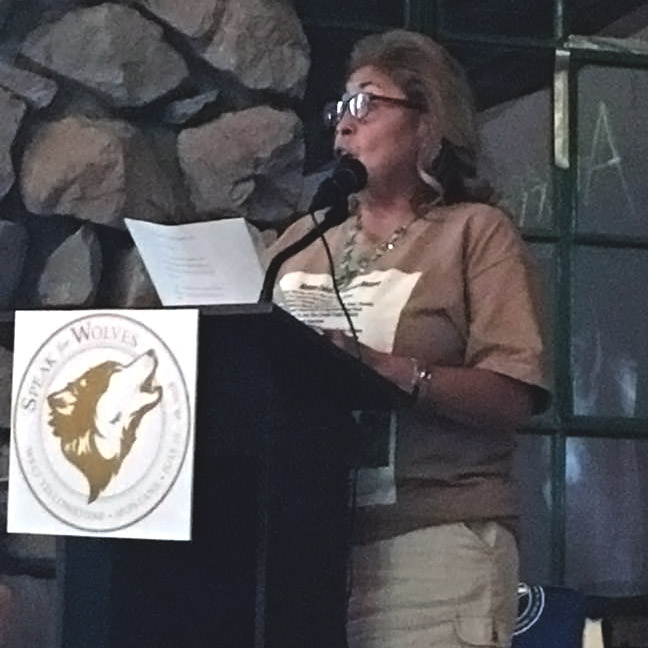
Corrine Nugent-Hayes, a longtime Speak for Wolves attendee and supporter, will open the conference with a reading of her poem, “When Shall These Mournings For Us End“. In mourning the death of another Yellowstone Wolf, 1155Mb Corrine had to wait until O’ Great Creator began sending through her these Honorable & Humbled Words. Aho.
“Remembering my teachings as a young Native girl proved important while watching the Eco-system’s full cycle of all Humanity. Mankind, Animal Kind were created to show the world how true oneness must work together. A lesson I continued as I raised my own Wolves while having respect for all kind. Afforded many gifts from Our Creator, I learned I had such passion for life in a whole I began to love Art & Creative writing.”
2021 Conference T-shirts
Available in our store!
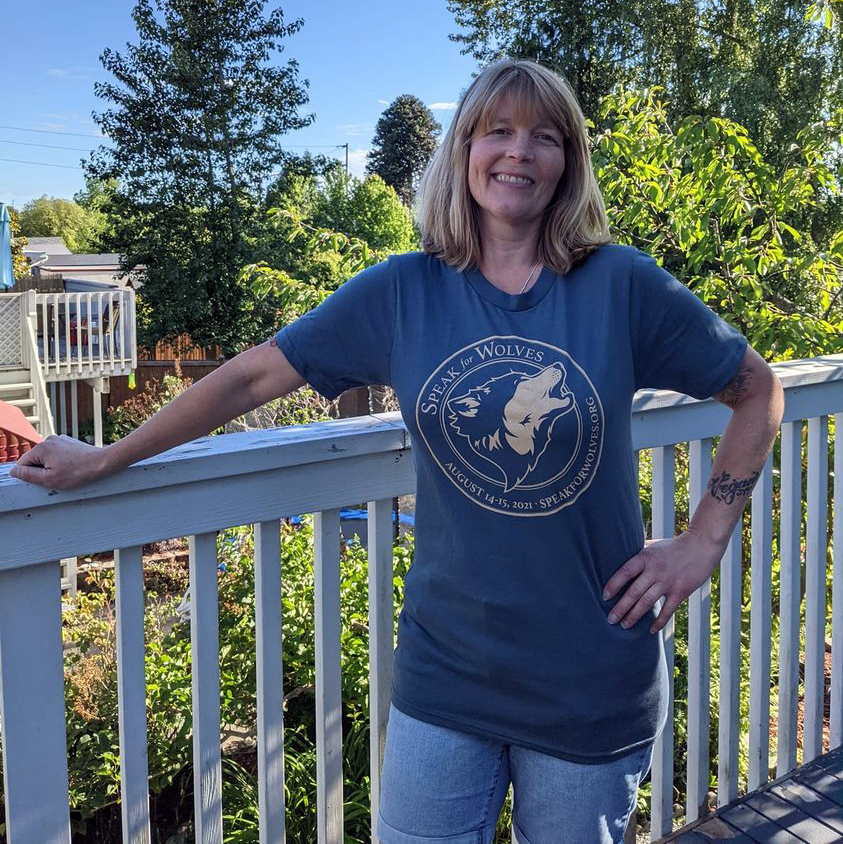
This year’s shirts are screenprinted by a local Portland artist on 100% organic cotton, sweatshop free, USA-made, unisex, soft jersey Royal Apparel tees in Pacific Blue color with gold ink.
Buy yours now to support the conference!


 Speak for Wolves